SCHOOL OPERATIONS GUIDE
How to write preschool contact book notes: 12 examples, comments and a template
SchoolConnect Editorial TeamPublished: October 26, 2026Updated: November 9, 2026
A preschool contact book note can describe the situation you observed, the child’s response, the support you provided and any follow-up needed from the school or family. Choose one useful detail from the day, and record specific actions or words so families understand what happened and how they can help.
This guide is for preschool teachers in Taiwan, and for directors who want one writing style across the school. It includes 10 teacher notes and two parent replies, plus short examples for leave, pick-up, announcements and photos; directors can jump to How directors can standardize contact book entries across the school. All examples are fictional, editable illustrations, not records of real children. Adapt them to your observations and school procedures. Do not copy events that did not happen, or include other children’s names or identifying details.
A preschool contact book template: five fields to get started
Select and copy the text below, then adapt it for a paper or digital contact book. If families do not need to do anything, say “No additional follow-up needed today.”
Date: [year / month / day]
Activity or situation: [time, place and what was happening]
Observation and child’s response: [actions, words, frequency or timing]
Teacher support: [reminder, demonstration or reassurance, and what happened next]
Family follow-up and next steps: [what to confirm, reply deadline, or no additional follow-up]
You do not need five separate paragraphs each time. Two or three sentences can cover what needs to be handed over. If temperature or meal details are already in fixed fields, use the note to add context or changes rather than repeating them.
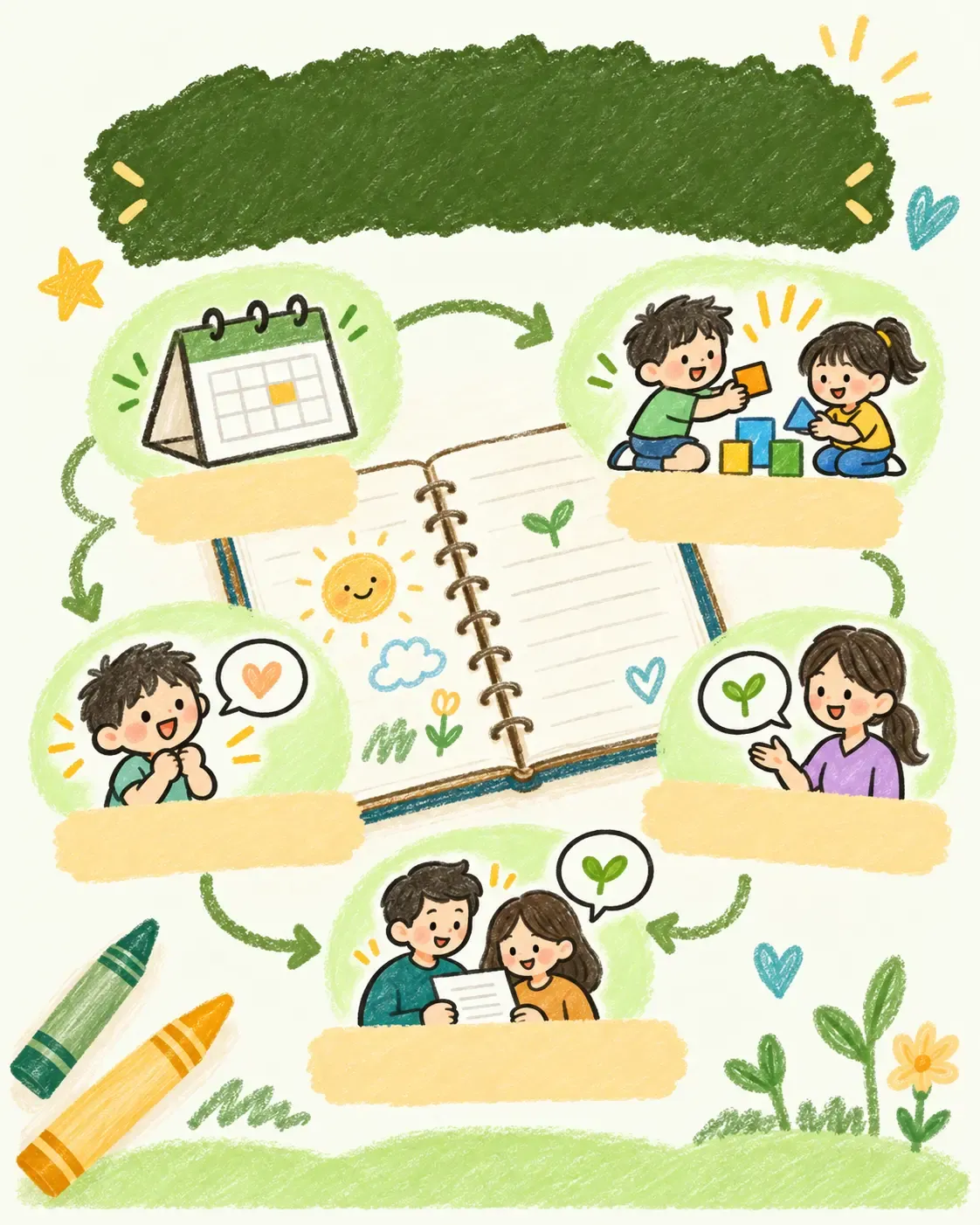
- Date
- Activity or situation
- Observation and child’s response
- Teacher support
- Family follow-up and next steps
What these five fields look like in an electronic contact book
In an electronic contact book, these five fields usually stay one note for the day: the date identifies that day, and the activity, observation, teacher support and family follow-up go in the message. When mood, meals, naps or photos already have their own fields, the note adds context or changes instead of repeating them. To compare paper and digital workflows, read the digital contact book guide; to learn about the pilot, see the Founding Pilot.
Writing alongside photos: one photo and two sentences
One or two photos that show the process are enough, with a sentence or two about what the child is doing. Before sharing, check that only the right family will see them and that no other child’s face or name tag can be identified. Follow the photo rules the school has already told families about. If your school uses SchoolConnect, how data is handled is described in our privacy policy.
Today’s note includes one photo of your child in the planting area, sent only to you. They are using a small trowel to cover the soil back over the pot and said, “This way the roots won’t get cold.” Other children were asked to step out of the frame first, so no other child’s face or name tag appears in the photo. If you would prefer your child’s photos not be used anywhere beyond the contact book, tell the class teacher at any time and we will follow school procedures.
Daily activity examples
Example 1: Exploring with blocks
During block play today, your child tried placing a long block across two towers. It fell twice. They said, “They’re too far apart.” The teacher helped compare the distance between the towers, and your child moved them closer to complete a small bridge. If they bring it up at home, you could ask how they built it. Tomorrow we will continue observing how they adjust their structures.
Example 2: Shared reading and expression
During shared reading today, your child pointed to a picture and said, “He’s looking for his mom.” When the teacher asked, “What makes you think that?”, they pointed to the character turning his head. The teacher shared this observation with the class, and your child continued explaining their ideas. When reading together at home, you could let them choose a picture to talk about; no extra homework is needed.
Health and temperature observation examples
Record what you actually observed and what you did under the school’s procedures. Do not infer a diagnosis or give treatment advice in a contact book. For matters needing an immediate response, contact the family directly through the school’s established process; a note supplements that communication.
If a family asks a teacher to help administer medication, follow the school’s announced medication procedures rather than relying on a contact book message alone. Article 11 of Taiwan’s regulations on early childhood education and care services requires preschools to establish medication procedures and inform parents or actual caregivers.
Example 3: Temperature record and handover
After outdoor play today at 10:20, your child said, “I’m so hot.” Following school procedures, a forehead thermometer showed 37.6°C. The teacher stayed with them in the classroom to rest and drink some water. A recheck at 10:50 was 37.1°C, and the teacher phoned Mom at 11:00. If anything else comes up tonight, please reply so we can include it in tomorrow’s handover.
Example 4: Physical observations during an activity
After outdoor play began today, your child stopped twice to rub their nose and said, “My nose is itchy.” The teacher stayed with them while they paused the activity, followed the school’s care procedures and continued observing. Back in the classroom, they joined a table puzzle activity. Please share any observations from home tonight to help tomorrow’s handover. If anything needs immediate confirmation, we will contact you directly through the school’s established process.
Meal and nap examples
Example 5: Trying a food
At lunch today, your child finished the rice and tofu first and left the greens at the edge of the plate. They said, “I don’t want this yet.” The teacher introduced the vegetable and let them decide whether to try it; they later took one bite. This describes today’s meal. Please share any eating observations from home. We will continue observing without judging your child by whether they finish their food.
Example 6: Settling before a nap
Before today’s nap, your child sat up twice after lying down to look for the teacher. The teacher explained the rest-time routine and helped arrange their blanket. They fell asleep at about 13:10, woke at 14:20 and put their pillow away independently. Please let us know whether last night’s routine was different. Tomorrow we will continue observing how they settle before their nap.
Behavior and growth examples
Example 7: Practicing turn-taking
During toy-car play today, your child reached for a car another child was using. The other child said they were still playing. The teacher helped both children pause and modeled, “Can I have a turn when you’re finished?” Your child repeated it once, waited nearby and took the car when it was their turn. Tomorrow we will continue helping them express what they want to play with. Please share how they respond to turn-taking at home.
Example 8: Putting belongings away
After outdoor play today, your child put their hat back in their cubby but left their water bottle on the table. The teacher pointed to the storage picture card and asked them to check what was missing. They found the bottle and put it away. Tomorrow we will continue using the card as a reminder and observe whether they can complete the routine independently. No additional follow-up is needed today.
Parent reminder examples: supplies, events and fees
State the date, item or task, what the family needs to do and who can answer questions. The examples below use fictional dates, items and amounts. Fees and activity details must follow what the school has actually confirmed and announced.
Example 9: An activity and supplies to bring
Next Wednesday (5/14) we will hold a campus plant observation. Today we introduced the activity routine together, and your child mentioned wanting to look for “fuzzy leaves.” Please prepare one small magnifying glass and a sun hat, labeled with your child’s name, by 5/13. Please reply by 5/12 about whether they will take part that day. If preparing the supplies is difficult, tell the class teacher through the contact book or the school phone so we can make arrangements in advance.
Example 10: Confirming a previously announced fee
Please confirm the field-trip fee notice the school issued on 5/2. The amount is NT$350, due on 5/16. The payment method and breakdown are on the paper notice. If you have already paid, please sign the contact book to confirm, following the school’s process. If you have questions about the item, amount or arrangements, contact the administrative office directly to check.
Parent reply examples
A short reply can acknowledge the update, add an observation from home and confirm a next step. A long reflection is not necessary each time.
Example 11: Adding observations from home
Thank you for sharing how the turn-taking with toy cars went. During a board game at home last night, our child also asked, “Is it my turn?” and waited for the other person to finish. We will keep using the same wording. Could you also watch next time to see whether they ask for a turn independently?
Example 12: Confirming activity supplies
We have received the plant observation notice and will prepare a magnifying glass and a sun hat, labeled with our child’s name, by 5/13. Could you confirm whether the pickup time that day follows the official notice so we can plan? Thank you.
Leave and pick-up note examples: replying to family notices
Absences, temporary pick-up changes and school announcements all follow the school’s established process. A contact book note records the details and confirms them; it does not replace a phone call or an official form. For same-day changes, families should call the school directly. The dates, people and arrangements in these three short examples are fictional.
Replying to a family’s absence notice
We received your 5/6 notice that your child will be absent for two days (5/7–5/8). The class has recorded the absence; whether meals are canceled for those days follows school rules. Small groups will work on counting activities, and the teacher will go through it with your child during group time after they return. If they are still unwell on the day they return, please confirm with the school first, following school procedures. We will watch how their day goes once they are back and let you know.
A temporary change in who picks the child up
We received your 5/9 call explaining that your child’s aunt will pick them up on the afternoon of 5/12. Under the school’s pick-up rules, please complete the authorized pick-up registration that day and bring photo identification; the teacher releases the child only after checking it. If you change back to picking them up yourself, please call us rather than leaving a contact book message alone. We also explained the arrangement to your child today, and they said, “I know.”
An announcement with a reply slip
On 5/13 the school issued the announcement for the 6/3 family day. The time, location and family seating arrangements are on the paper notice. By 5/20, please mark the number of people attending on the reply slip, sign it and return it to the class teacher. If you need parking or specific seating, note that on the slip as well. The official school notice governs the details; contact the administrative office with any questions.
Writing comments: replace praise and labels with specific observations
A comment can show families what their child did and what support they need. A situation and an action give more useful information than “great.” Describing what happened today also avoids turning one action into a fixed personality trait.
- Before: “Great job today.”
After: “While tidying up, they put three books back on the shelf independently and reminded a classmate to join in.” - Before: “Very inattentive.”
After: “Left the seat twice at the start of shared reading. After the teacher invited them to help turn the pages, sat and participated until the story ended.” - Before: “Unsociable.”
After: “Watched from the side at the start of the group game, joined two rounds after the teacher’s invitation, then chose to rest at the side.” - Before: “Another tantrum.”
After: “Cried and said they wanted to keep playing when it was time to put toys away. The teacher helped them express their feelings and confirmed the next playtime, then they put the toys away together.”
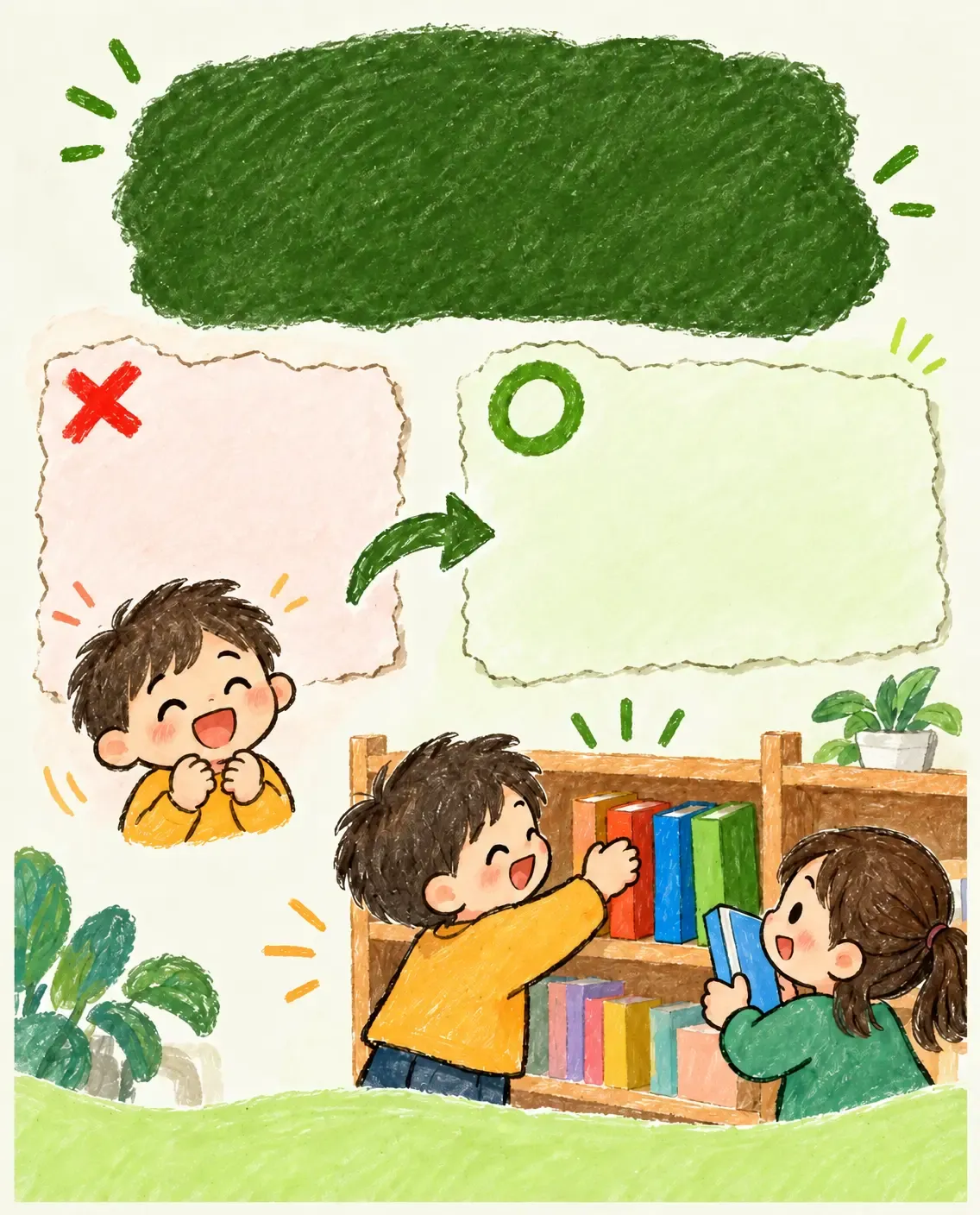
- “Great job today.”
- “While tidying up, they put three books back on the shelf independently and reminded a classmate to join in.”
These rewrites are also illustrations. Before sending a note, check whether it reflects actual observations, explains the support provided and states what the family needs to reply about. Discuss sensitive or more involved matters through an appropriate channel under school procedures, retaining only necessary records.
Writing comments for new-student adjustment and the end of term
Comments during a new student’s adjustment period and at the end of term are often longer than usual. The approach does not change: describe the behavior you can see and the support you provided, do not predict how long adjustment will take, and do not sum up a child’s personality in one end-of-term sentence. The four lines below are also fictional illustrations.
- New-student adjustment (first week): “Cried for about five minutes at drop-off today. The teacher stayed to look at the fish tank by the door, then they walked into the classroom; by morning snack they were getting their own bowl.”
- Separation anxiety: “Held on to Mom’s jacket at drop-off today. The teacher changed the routine to putting the jacket in the cubby together before waving goodbye, and today’s crying was shorter than yesterday’s.”
- End of term (progress this term): “Started saying which toy they want to play with this term; invited a classmate to play three times this month.”
- End of term (next step): “Still needs one reminder when putting toys away; next term we will start with a picture card so they can check the steps themselves.”
A writing habit: review one child’s entries each week
Each week, pick one child and read back through that week’s entries together. It is an easier way to notice whether every note uses the same sentence, whether you mostly remember the more outgoing children, and whether something you asked a family to follow up on last week ever came back. On paper you can turn back a few pages; in an electronic contact book, review a day’s records the way the tool provides. What matters is reviewing regularly rather than catching up all at once at the end of term.
How directors can standardize contact book entries across the school
Directors can use one format so notes from different classrooms can be compared. These are useful points to agree on first.
- Required and optional fields: Decide which fields are written every time and which are used only when relevant. If families do not need to do anything, say that no additional follow-up is needed today.
- Health and medication handover: For health, record only what was observed and what the school already did. Medication requests follow the school’s medication procedure, not a contact book message alone.
- Reply deadlines for parent messages: Agree on a window for answering parent messages. Anything that needs immediate confirmation goes through the school’s established contact process, rather than waiting in the contact book.
- Spot-checking entries: A director or administrator periodically reviews notes to confirm they come from that day’s observations, omit other children’s names or identifying details, and avoid label-style comments.
- A shared example bank: Keep one set of examples the whole school can adapt. Teachers rewrite them from what actually happened, and do not copy events that did not.
Frequently asked questions
What should a preschool contact book note include?
Start with the date and activity, then describe what you observed, the child’s response, the support the teacher provided and any family follow-up. One useful detail from the day is enough; there is no need to repeat every activity.
Do teachers need to write every day?
Follow the school’s established schedule and fields. Record handover information when it is needed, without writing long comments just to fill space. For urgent matters or anything needing immediate confirmation, use the school’s established direct-contact process rather than leaving a note and waiting for a reply.
How should a note describe a child’s behavior?
Describe the situation, what you saw or heard, the support provided and what happened next. For example, replace “unsociable” with “watched from the side at the start of the group game, then joined two rounds after the teacher’s invitation.” Avoid labels, guesses about motives and comparisons with other children.
How can parents reply to a contact book note?
Briefly acknowledge the update, add observations from home or confirm what you can do, and ask one specific question if needed. For health matters or anything requiring an immediate response, contact the school through its established process.
How should a note cover an absence or a temporary change in who picks the child up?
Handle absences and pick-up changes through the school’s established process first — a phone call, or completing the authorized pick-up registration. The contact book then confirms the details and keeps a record. Write down the date, what the school has registered, anything to watch for on the day the child returns or is picked up, and whatever the family still needs to reply about.
How can a school make teachers’ contact book notes consistent?
Agree on the shared fields first: which are required, which are optional, how health and medication handovers are recorded, and the reply window for parent messages. A director or administrator can spot-check entries and give teachers one example set to adapt.
How can schools lighten the work of writing contact book notes?
Hand over one useful detail at a time, in a few sentences. Do not repeat information that is already in a fixed field. A shared format and example set also saves each teacher from inventing a style alone.
Is the writing the same on paper and in an electronic contact book?
Observations, the support the teacher provided and any follow-up can use the same writing. An electronic contact book usually keeps the date, and mood, meals, naps or photos, in fixed fields, and uses the note to add context or changes.
Related reading: from writing notes to digital workflows
If you are considering moving from paper to digital records, read the preschool digital contact book guide: apps, LINE differences and pros and cons. For the product’s daily record workflow, see SchoolConnect’s daily contact book features. A digital contact book day usually starts with arrival check-in, and attendance status and the rest of the day’s record build on the same class list; see the preschool attendance and check-in features. If your school is ready to begin soon, explore the Founding Pilot Program, limited to 10 schools.
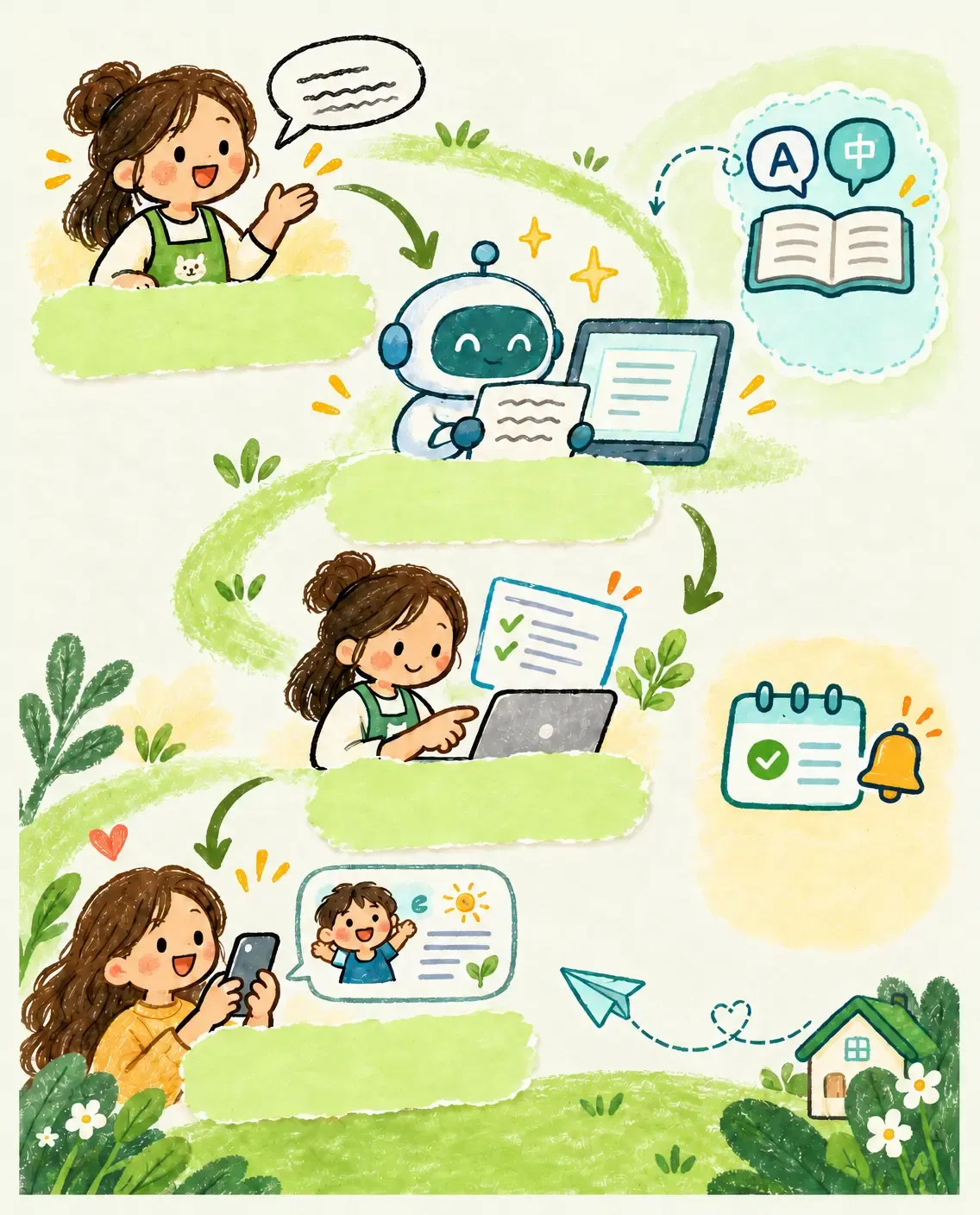
- AI dictation (Beta)
- Teacher dictates
- AI drafts
- Teacher reviews
- Sent to parents
- Chinese–English translation (optional)
- Check-in and daily contact book (Live)
Considering digital contact books and check-in?
Explore the selective Founding Pilot Program, limited to 10 schools. The product is still in its pre-launch pilot stage, and available features depend on the current pilot version. Applying does not guarantee a place.
The pilot is free with access to all pilot-ready features. It ends at general availability or March 31, 2027, whichever comes first, with at least 30 days’ notice.
- Continue free for 12 months after general availability
- Agree on the subsequent founding-school rate in writing before onboarding
- No charge without your agreement
- No fees charged to parents